The Kitchen That Smelled Fine Until It Did Not
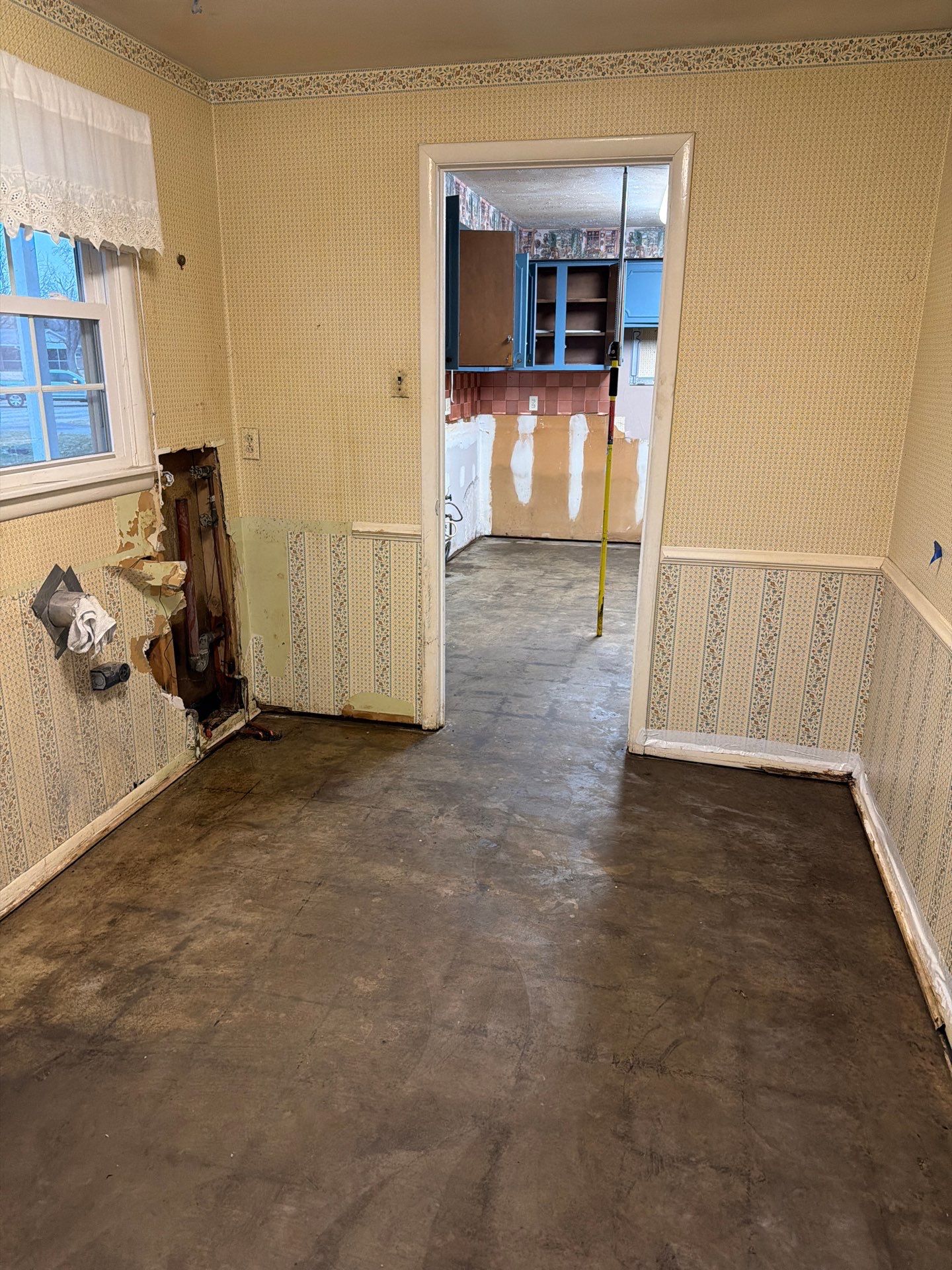
One Fairland homeowner called us last spring because her dishwasher seemed to run louder than usual. No puddles, no warped flooring, no visible stain. When our tech pulled the kick plate, the subfloor under the dishwasher read 38% moisture content on a pin meter. Dry wood sits around 8 to 12%. The supply line fitting had been weeping behind the unit for what we estimated at eight to ten months based on the mineral staining pattern.
The damage extended four feet into the adjacent cabinet run and down through the subfloor into a finished basement ceiling below. Total restoration ran roughly $7,800, with the homeowner's insurance covering about $6,200 after deductible. Had she called when the leak started, we would have been looking at a $1,400 job. That gap is the entire reason we push early detection so hard. For more on how appliance lines fail quietly, our writeup on dishwasher leak water damage and floor repair walks through the typical failure points.
What stuck with the homeowner was not the cost. It was the fact that her teenage son had complained about a "weird smell" in the kitchen for months, and everyone had blamed the trash can. That smell was the early colony of mold growing on the back side of the cabinet bottom, releasing microbial volatile organic compounds long before any visible sign appeared. We tell people now: if a family member keeps mentioning a smell you cannot find, take it seriously. Noses often beat moisture meters by weeks.
The Upstairs Bathroom That Soaked a Dining Room Ceiling
A Fairland family noticed a faint brown ring on their dining room ceiling in October. By Thanksgiving it had grown to roughly the size of a dinner plate. The husband figured he would paint over it after the holidays. We got the call in February when a chunk of drywall fell onto the table during dinner.
The source was a wax ring failure on the second floor toilet. Every flush had been sending a small amount of water down the flange and into the joist bay below. Our thermal imaging showed the wet zone extending nearly six feet in three directions from the toilet base. Two joists had visible fungal growth consistent with prolonged Category 2 exposure. We treated the framing, removed and replaced 42 square feet of drywall, and ran containment for nine days of structural drying.
The final invoice landed near $9,400. The insurance adjuster covered most of it, but flagged the claim as "delayed reporting" and warned the homeowner that future hidden damage claims could be scrutinized harder. That is a real consequence people forget. Painting over a stain does not just hide the problem from you, it can hide it from your insurer in a way that hurts you later. When in doubt, document the stain with a photo and a date, and have someone look at it within the week.
Signs You Probably Already Have
Across these case files, certain warning signs show up again and again. You will notice them if you know what to look for:
- A water bill that creeps up $15 to $50 with no change in habits
- Paint that bubbles or cracks along a single seam
- A musty smell that comes and goes with humidity
- Warm or cool spots on a wall that should be uniform
- Flooring that flexes slightly underfoot near a fixture
One of these alone might mean nothing. Two or three together usually means you should have someone check. We also recommend our guide on signs of hidden water damage and early detection for a more complete checklist you can run yourself.
How Long These Leaks Typically Hide
People always ask how a leak can run that long without anyone noticing. The honest answer is that homes are built to hide them. Drywall wicks moisture upward and outward, insulation soaks it like a sponge, and HVAC systems pull humid air away from the source. Across our Fairland service area, a supply line pinhole typically runs 6 to 9 months before discovery. A shower pan crack can hide 12 to 18 months because the tile and grout mask the failure entirely. A toilet wax ring usually goes 8 to 14 months. A refrigerator water line behind the unit averages 4 to 8 months, and an AC condensate line tends to surface within 3 to 6 months because the volumes are larger during cooling season.
Those ranges are not guesses. They come from the staining patterns, mineral deposits, and decay stages we document on each job. The longer a leak runs, the more expensive and invasive the fix becomes, and the more likely you are dealing with Category 2 or Category 3 water rather than the cleaner Category 1 you started with.
What a Fairland Water Restoration Assessment Actually Looks Like
When you call, we dispatch a crew in most cases within 2 hours. The assessment itself is free. A tech walks the home with a thermal camera and a moisture meter, checks the obvious spots first, then traces any anomaly back to its source. If we find a real problem, we walk you through the scope, the cost range, and how it likely fits your insurance policy. If we find nothing actionable, you owe us nothing and we leave. That has happened plenty of times, and we would rather be honest than sell you a job you do not need.
The Crawl Space Nobody Looked At
A Fairland retiree called us after his utility bill jumped about $40 a month over the summer. He thought his AC was failing. His HVAC tech checked the unit, found nothing wrong, and suggested he look at the crawl space. He opened the access hatch for the first time in maybe four years and found standing water across roughly a third of the footprint.
The source turned out to be a cracked PVC fitting on a cold water line that fed an outdoor spigot. The leak had likely been running since the previous fall. By the time we arrived, the vapor barrier was floating, two floor joists showed active mold colonization, and the relative humidity in the space was over 90%. We pumped out the standing water, dried the structure over twelve days, and coordinated mold remediation under S520 protocols. If your crawl space has gone unchecked for a while, our notes on crawl space water damage removal and drying are worth a read.
The retiree asked us afterward what he should have been doing. Our answer was simple. Open the crawl space hatch twice a year, in spring and fall, and shine a flashlight across the vapor barrier. If you see standing water, sagging insulation, or anything that looks darker than the surrounding ground cover, call someone. Ten minutes of looking, twice a year, would have caught this leak inside the first month.