Commercial Storm Damage in Fairland, IN
Wind driven rain through failed roof drains or open membrane seams gets dried out at Fairland commercial properties.
Commercial Storm Damage in Fairland, IN starts with one call to Fairland Water Restoration: live 24/7 dispatch, IICRC certified response, and honest written scopes before work begins. Call (765) 978-5086.
- Service: Commercial Storm Damage for Fairland homeowners
- Service area: Fairland, IN and surrounding areas
- Response time: Around the clock dispatch; Fairland emergencies move to the front of the line
- Licensed and insured (License #RC21100059)
- Serving Fairland, IN since 2018
Commercial Storm Damage Cleanup in Fairland
We handle commercial storm damage cleanup across Fairland, and we'll work around the parts of the building that need to stay open.
Storms Here
Fairland sees tornado activity slightly above the Indiana average, which matters for roofs and glass on a commercial building. Damaging wind can hit here, and that puts roofs and rooftop equipment at risk. NWS Indianapolis posts summaries of past storms, which helps when your carrier asks for a date.
We respond to storm calls from businesses anywhere in Fairland, including those around I-74 corridor access at Fairland and Triton Central High School. We also handle commercial storm damage in Waldron, Flat Rock, Morristown and Shelbyville.
Commercial Storm Damage for Fairland Businesses
Water through a roof breach tends to find the one room you'd never choose, because electrical rooms and IT closets sit under the mechanical penetrations. Power gets shut off and the business stops before the water damage even registers. A crew dispatches to commercial intrusion in Fairland within two hours, pulls standing water away from equipment first, and works with your electrician on what can safely be reenergized.
Fairland Water Restoration inspects the temporary dry in after every rain while the interior equipment is up, because a drying area that keeps taking on water never reaches its target. When a permanent repair is in the works, interior closeout in your Fairland building waits for it, and the daily log shows the date each piece of the work finished.
At your Fairland storefront, the entry floor holds the most water, so the crew starts there. The water gets pulled off the tile or carpet, and a meter checks the threshold and the base of the door frames. Carpet tile that took on clean water can often be dried and reused, and the adhesive underneath gets checked before anything goes back down.
Water that rose from outside, such as runoff reaching a loading dock, and water that backed up through a drain are often treated differently from rain that came through the building. Flood and drain backup coverage commonly sit outside the main commercial property form. Fairland Water Restoration records how the water entered your Fairland property, because that decides which coverage question applies.
Stock or equipment sitting in water at your Fairland property is the first thing to mention when you call Fairland Water Restoration. The crew plans the move and the protection before extraction begins, and you get a photo list of what moved that tenants can use for their own claims.
Signs You Need Commercial Storm Damage Restoration
If you notice any of these in your Fairland building, schedule a free inspection before the issue worsens.
A tenant reporting the same leak every heavy rain, in the same corner of the same suite
Stains that start at the top floor and reappear on the same wall two floors down
Paint blistering or wall covering bubbling on a wall that backs up to the exterior
A roof drain or scupper running slow, gurgling, or ringed with debris and sediment
Metal door frames rusting at the base, with the gypsum board around them swelling
Wet or stained carpet along an interior column line with no plumbing fixture anywhere near it
Carpet tile that squishes underfoot along the glass line of a storefront or window wall
Grout between floor tiles darkening in a pattern that spreads a little more each day
Corrosion on a fire sprinkler line or head where the pipe runs close to the roof deck
Daylight visible through a roof penetration curb or around the flashing at a rooftop unit
How Fairland Water Restoration Handles Commercial Storm Damage
We follow these steps in order on every Fairland job.
Power and Safety Walk
Before extraction starts, the crew walks the wet areas with your building engineer and confirms which circuits serve them. Cords run through ground fault protection, and the electrician decides what can be reenergized.
Contents and Inventory Protection
Stock and equipment on wet floors get lifted onto blocking or moved to dry ground, with plastic over anything that has to stay. A photo list records what moved and where, which supports each tenant's own claim.
Extraction and Debris Removal
Standing water comes off floors with portable and truck mounted units. Saturated lay in tile and wet batt insulation get bagged and hauled out. Water held in the plenum is released through controlled openings so it stops dripping onto tenant equipment.
Daily Readings Logged
Each day brings temperature, relative humidity and material moisture readings logged against an unaffected baseline elsewhere in the building. Equipment moves based on what the numbers show. The property manager gets the readings and the photos the same day.
Dry Standard Verified
Affected materials have to match the dry standard measured in an unaffected part of the same building before equipment comes out. Final readings, photos and equipment run hours go in the file, and a punch walk sets what's left to rebuild.
Commercial Storm Damage in Fairland
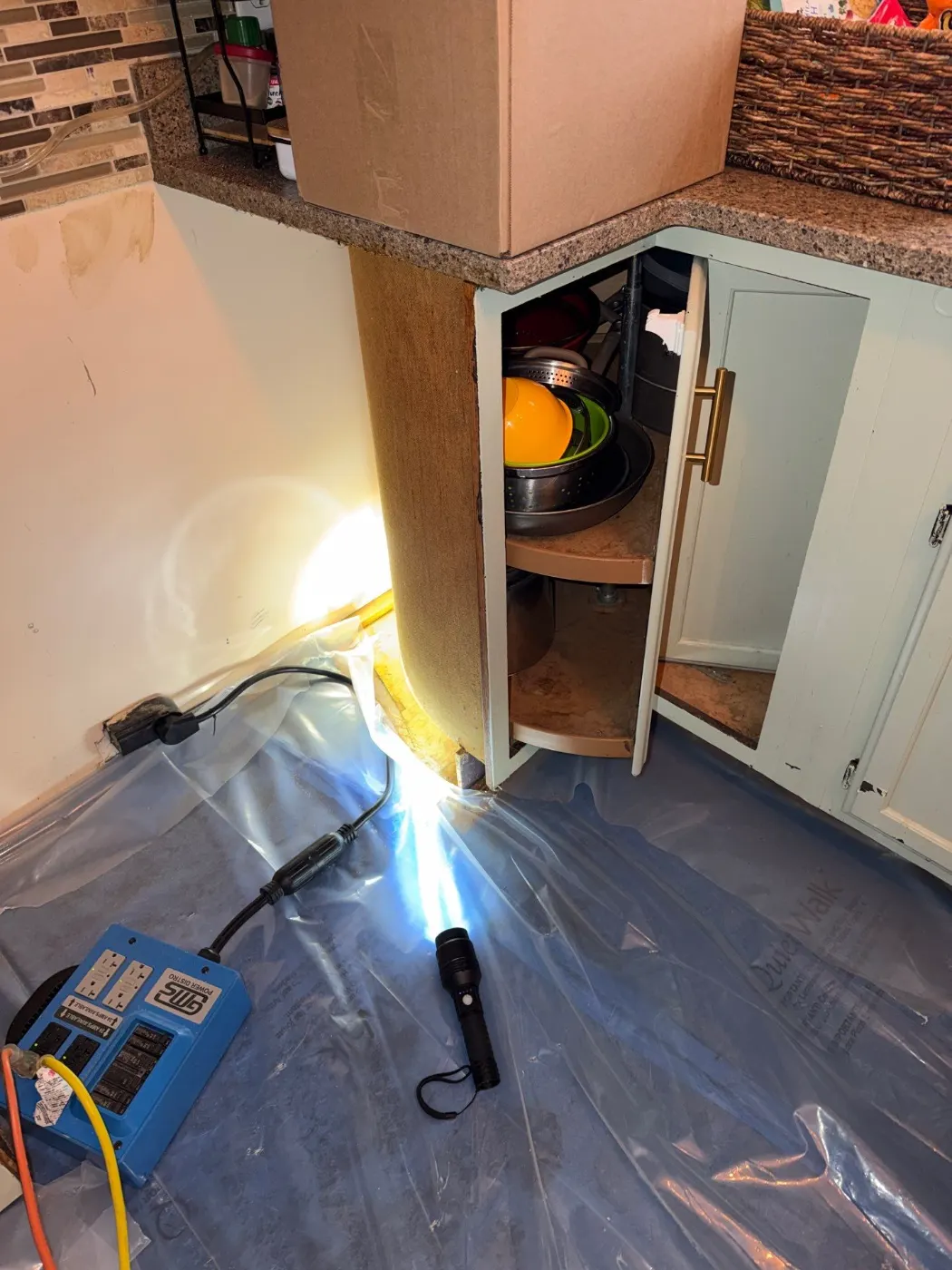
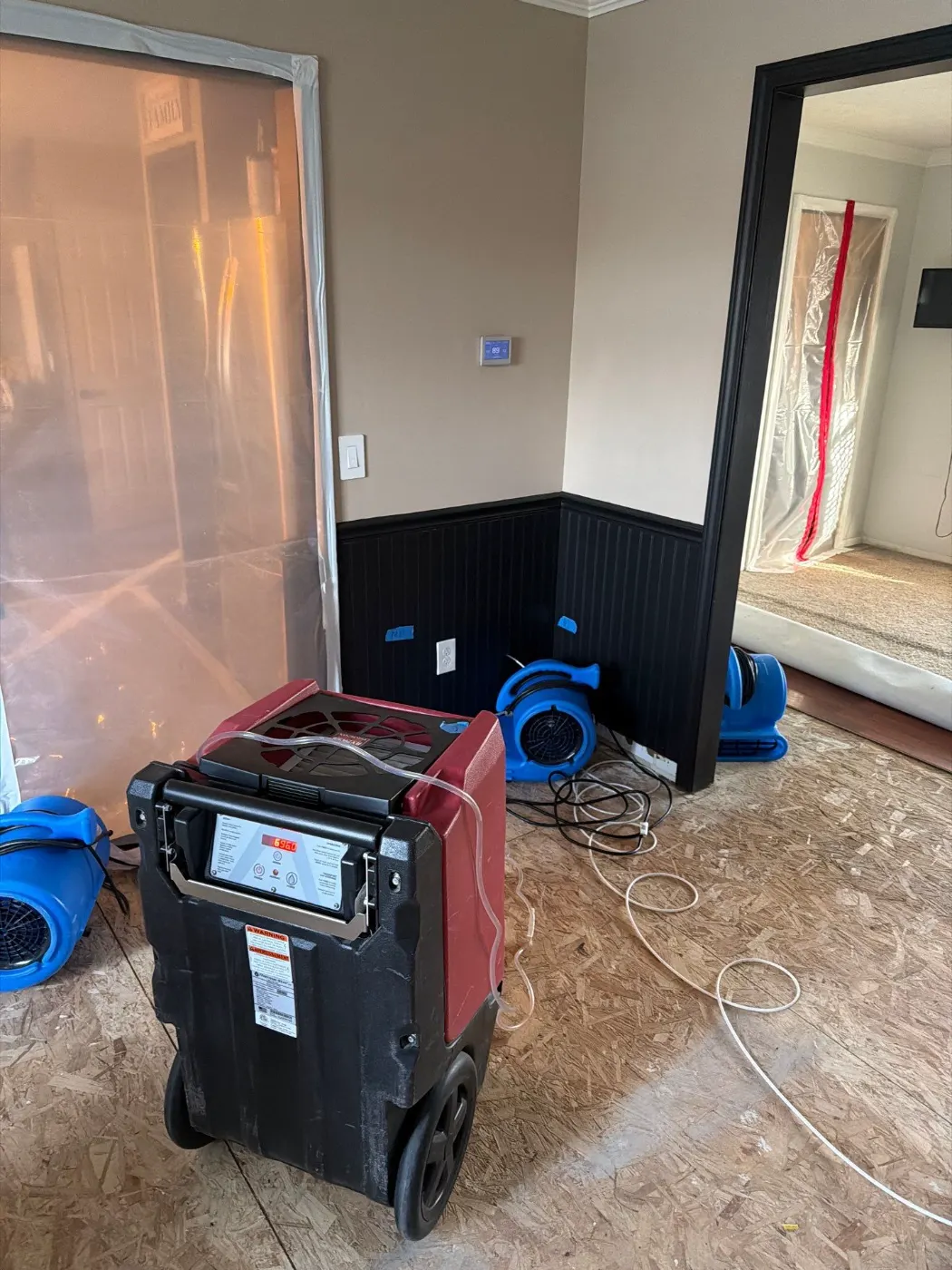
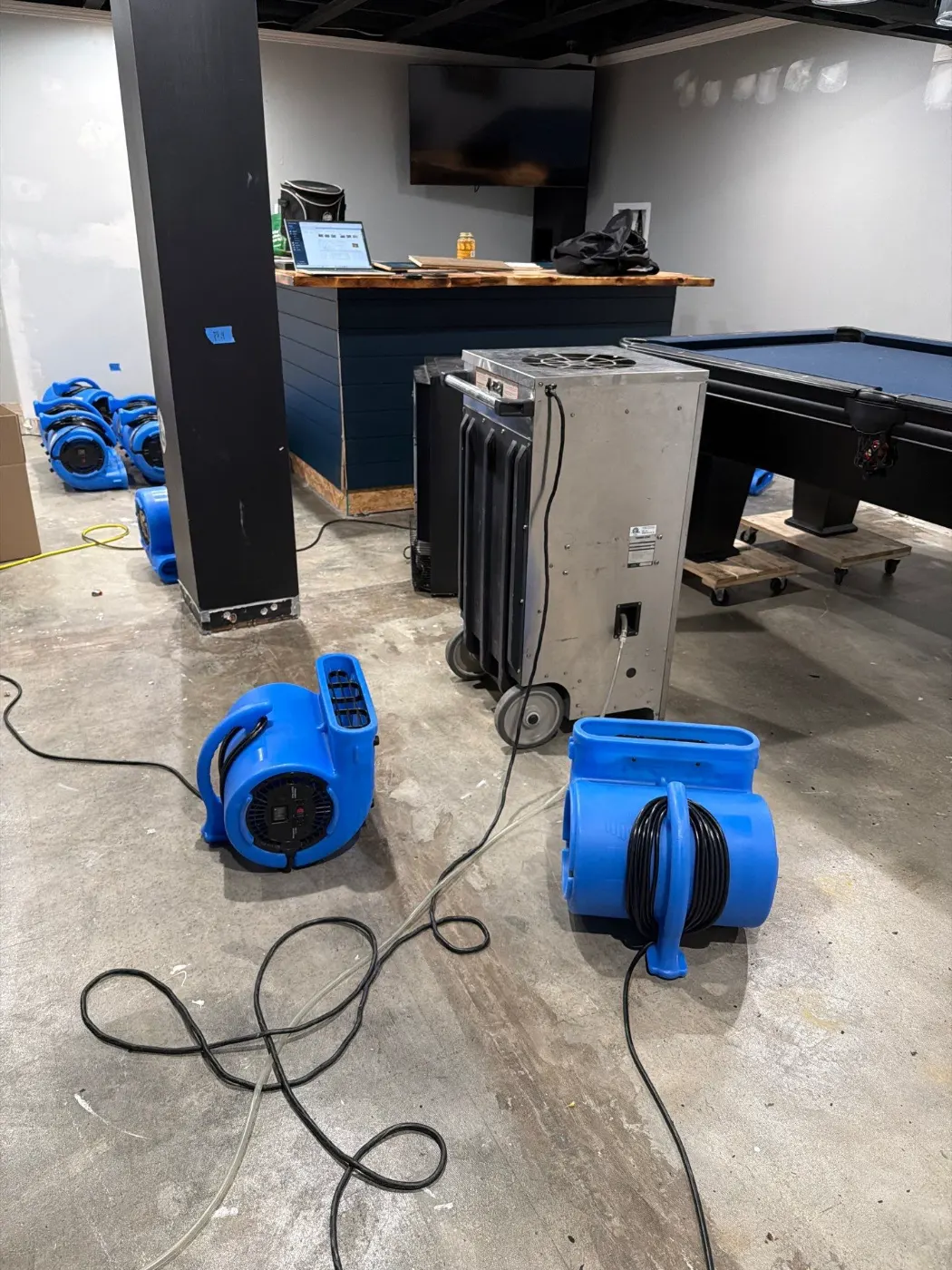
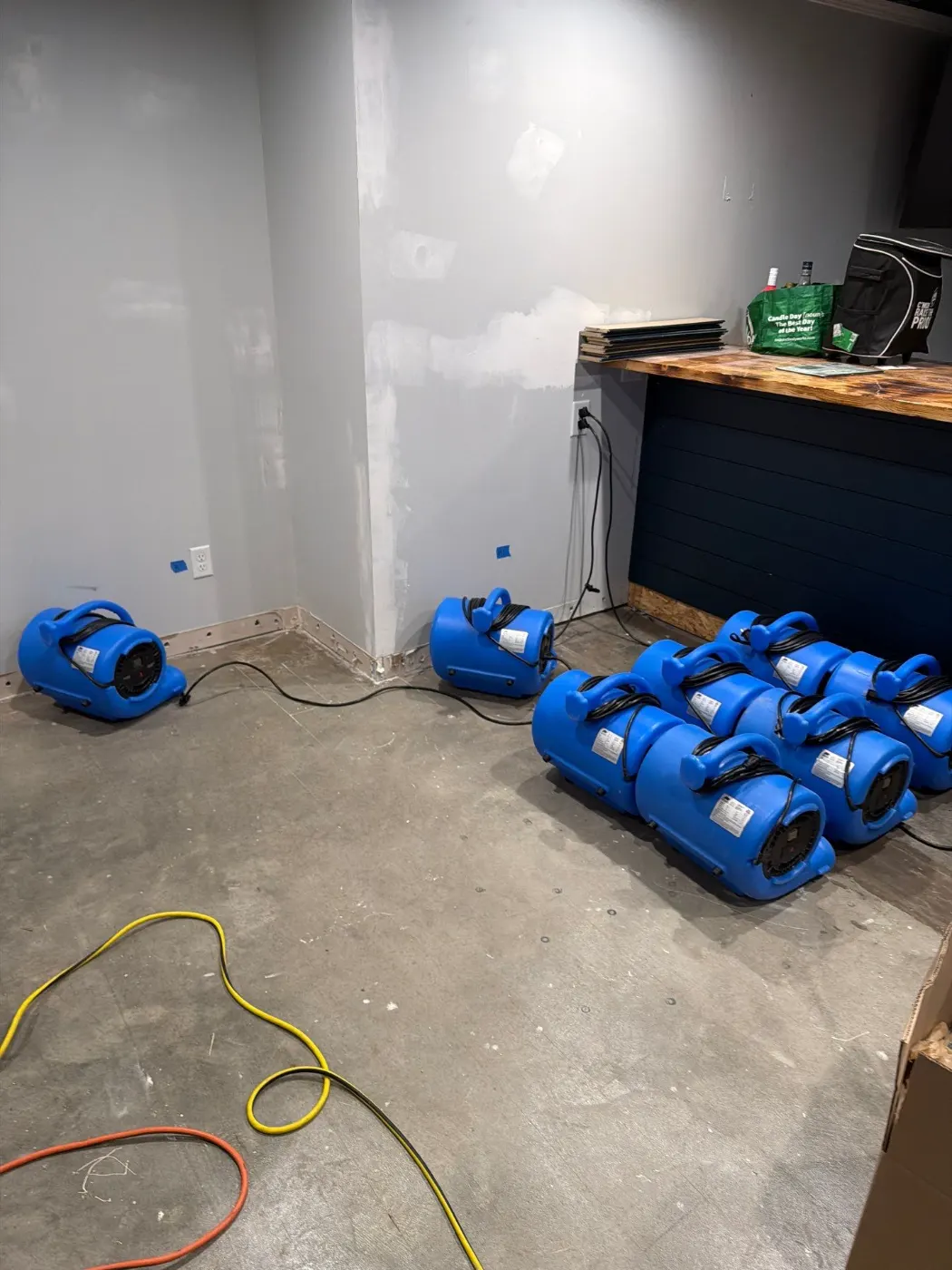
Photographs from real commercial storm damage jobs completed by our crew in Fairland and surrounding areas.
Commercial Storm Damage FAQ
Questions Fairland property managers ask us about commercial storm damage restoration.
Guidance and Standards for Commercial Storm Damage
- The National Weather Service office in Indianapolis posts summaries of recent central Indiana storm and flood events. NWS Indianapolis Event Summaries
- The ANSI/IICRC S500 is the published standard for professional water damage restoration. The current edition is the Fifth Edition, 2021. IICRC S500 Standard
Fairland Neighborhoods We Serve
We take commercial storm damage calls in every part of Fairland. Pick your neighborhood for local details.
Other Restoration Services in Fairland
Fairland Water Restoration handles the full scope of restoration work. Explore our other services below.
Water Damage Restoration in Fairland
24/7 emergency response. IICRC certified water restoration from extraction to full dry out.
Learn more →Basement Flooding in Fairland
Basement water emergencies handled fast. Extraction, drying, mold prevention.
Learn more →Sewage Cleanup in Fairland
Category 3 biohazard cleanup. Full containment, decontamination, structural restoration.
Learn more →Request Commercial Storm Damage Restoration
Reach Us Directly
Our team is available 24/7 for emergencies and ready to schedule inspections during business hours.
Need Immediate Help?
For active water or mold emergencies, call us directly. We are available 24/7.