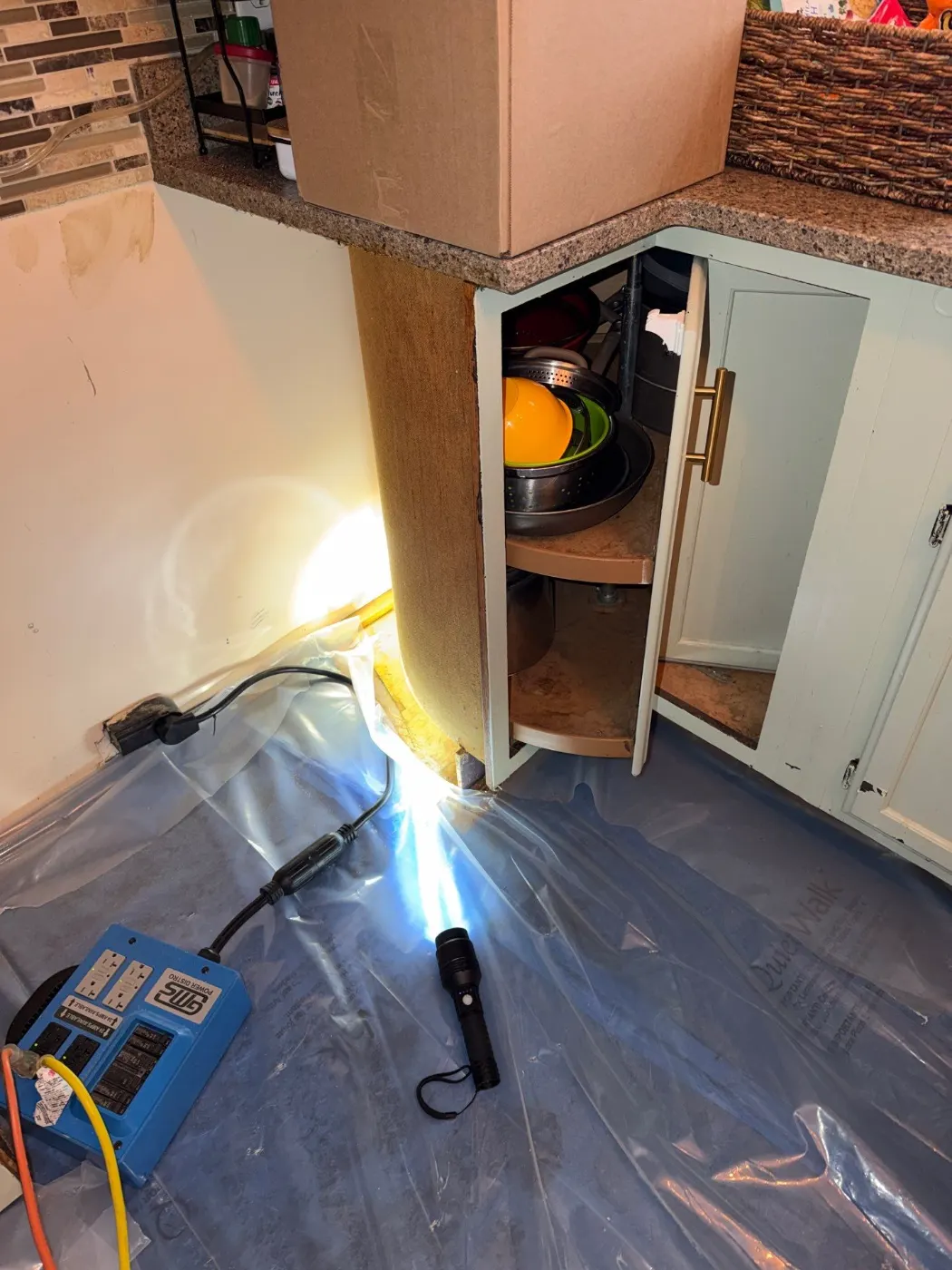
Commercial Water Restoration in Fairland, IN
Property managers in Fairland get scope by suite, daily moisture logs and documentation from extraction through rebuild.
Fairland Water Restoration handles Commercial Water Restoration for Fairland, IN homeowners: emergency dispatch around the clock, IICRC certified technicians, and insurance coordination on approved claims. Call (765) 978-5086.
- Service: Commercial Water Restoration for Fairland homeowners
- Service area: Fairland, IN and surrounding areas
- Response time: Same day emergency response for Fairland; 24/7 availability
- Licensed and insured (License #RC21100059)
- Serving Fairland, IN since 2018
Commercial Water Damage Restoration in Fairland
For offices and other commercial buildings in Fairland, we'll handle water extraction and drying at any hour.
Site Conditions
Freeze and thaw cycles each winter can burst pipes in unheated parts of a commercial building. Your building's own drains and roof get checked on the first walkthrough with whoever manages the property.
We cover commercial properties across Fairland, including the area around I-74 corridor access at Fairland and Triton Central High School. We also handle commercial water losses in Flat Rock, Morristown, Shelbyville and Greenfield.
Commercial Water Restoration for Fairland Businesses
Half of the open plan is dry and half is wet, and your people still need desks on Monday. Ceiling panels over the affected bays come down for drying while the rest of the office keeps working, and carpet tile can come up in sections. Fairland Water Restoration plans the drying in your Fairland office around who sits where.
Fairland Water Restoration handles the rebuild once the readings clear, from gypsum board and ceiling tile to flooring and paint. The rebuild scope comes from the same documentation that drove the tear out, so what goes back in your Fairland building matches what came out. You approve it in writing, and it can run in phases so tenants get their space back sooner.
Contents and records get triaged alongside the structure. Paper, media and inventory come off wet floors first, get inventoried and photographed, and go to dry storage or out to a specialty vendor when the material needs freeze drying. Furniture gets blocked up off damp flooring. Fairland Water Restoration crews keep the inventory list in the same file as the moisture log, so you get one package.
Fairland Water Restoration prices work that falls outside the loss separately and gets your written approval before it starts. Every invoice line ties back to a documented item in the file, so your accounting team can match the bill to the scope. Coverage questions stay with you, your broker and your carrier, and the documentation is yours to share with them.
The first warm afternoon after a hard freeze is often when a split pipe starts to run, and a closed building can hide it all weekend. Phone (765) 978-5086 when you find it, and Fairland Water Restoration will talk you through the first steps in Fairland while the crew gets ready to walk the building with your engineer.
Signs You Need Commercial Water Restoration
If you notice any of these in your Fairland building, schedule a free inspection before the issue worsens.
Rust staining at the base of steel studs, shelving uprights or racking posts
The water meter still turning overnight while every fixture in the building is shut off
Ice machine or dishwasher line leaking under equipment and spreading beneath the cove base
Brown stains forming on ceiling tiles beneath a roof drain location after a storm
Paint bubbling or peeling on a corridor wall just above the cove base
Cove base pulling away from gypsum board along a corridor or exterior wall
A shutoff valve or supply line weeping behind an access panel in a janitor closet
Ceiling tiles on the break room floor Monday morning with wet carpet tile beneath them
White chalky deposits appearing on a block wall or along a slab control joint
Pallets or cardboard cases showing a wick line a few inches up from the slab
How Fairland Water Restoration Handles Commercial Water Restoration
We follow these steps in order on every Fairland job.
Source Shutoff and Water Category
The engineer or the trade that owns the failed line closes it off, and the crew photographs the failure point and notes what kind of water came out of it. That category call sets how each wet material gets handled.
Air Handling Coordination
Units that serve the wet zone get identified with your engineer and HVAC contractor. Affected air handling is isolated or switched off, which keeps moisture from riding the return air to unaffected floors.
Moisture Mapping
Every affected area gets read with thermal imaging and both noninvasive and penetrating meters, floor by floor where water moved vertically. The crew photographs the source, and the readings set how much drying equipment each area needs.
Contents and Furniture Protection
Furniture and fixtures get labeled by room and photographed in place, then blocked up or moved to dry staging in the order the zones open. The inventory travels with the job file alongside the readings.
Structural Drying Design
Dehumidification gets sized from affected cubic footage and material porosity, with dry air ducted into ceiling plenums, wall cavities and shafts. Air movers get placed to keep surface air moving, and the calculation gets revised as readings change.
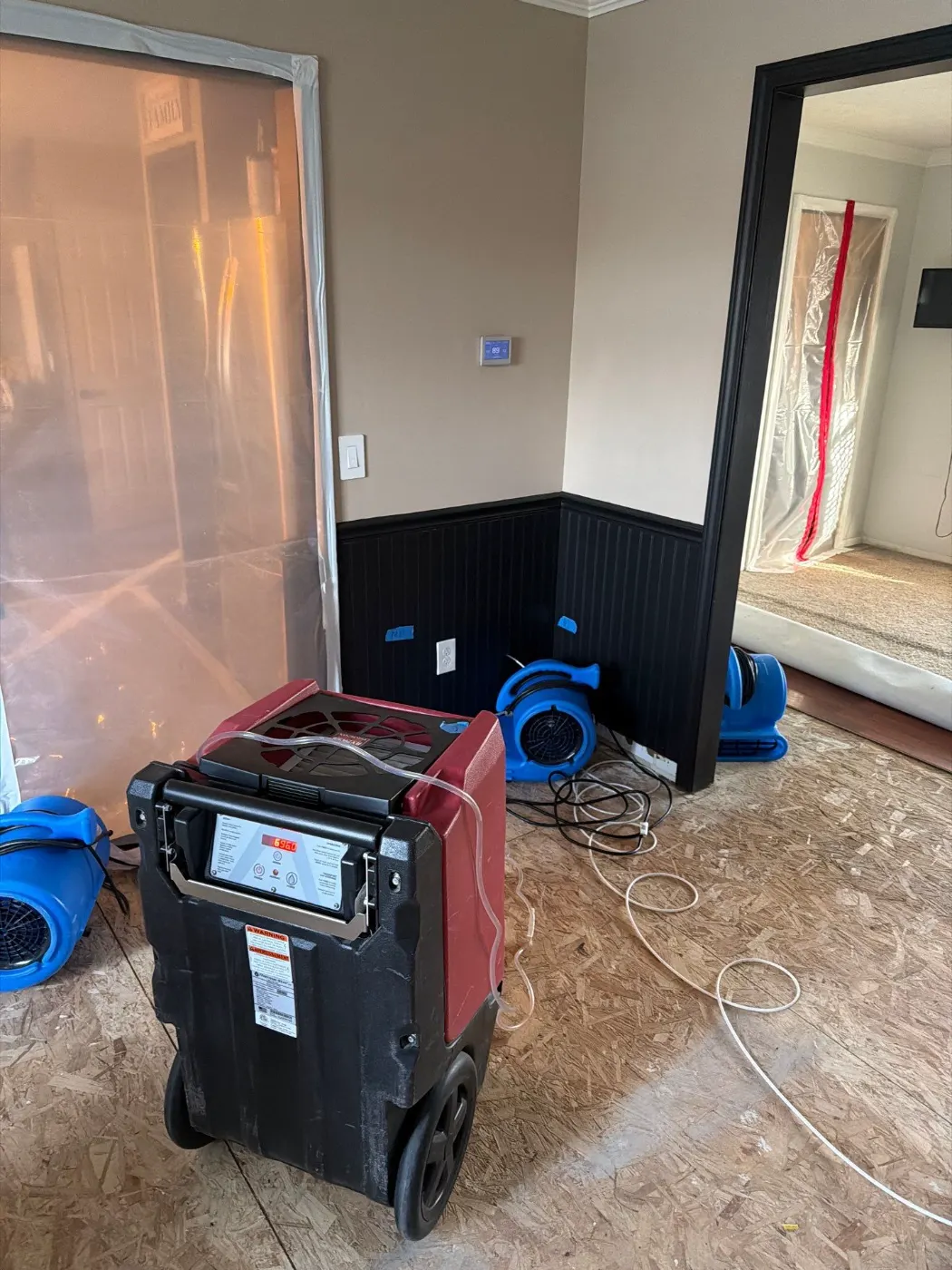
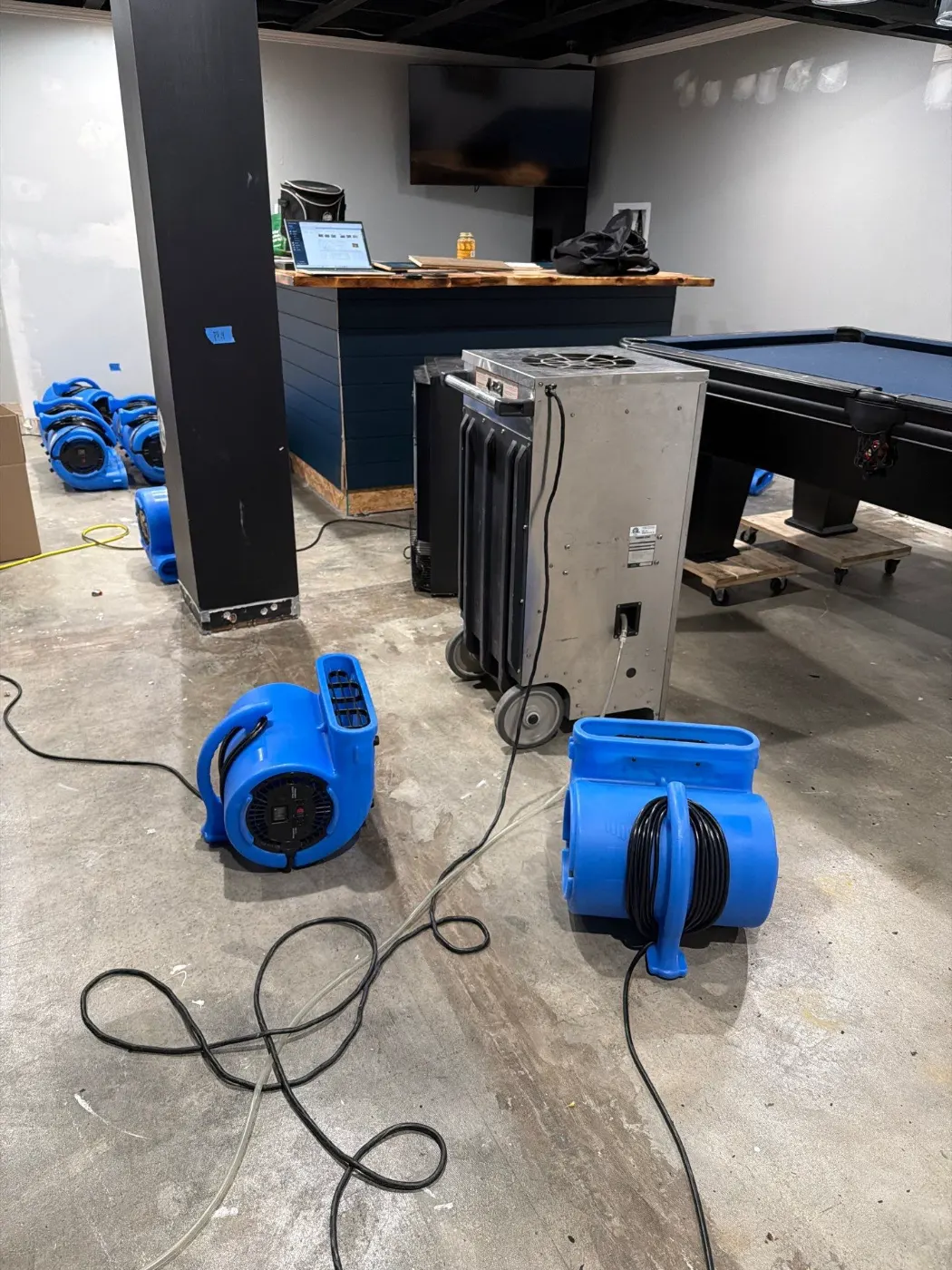
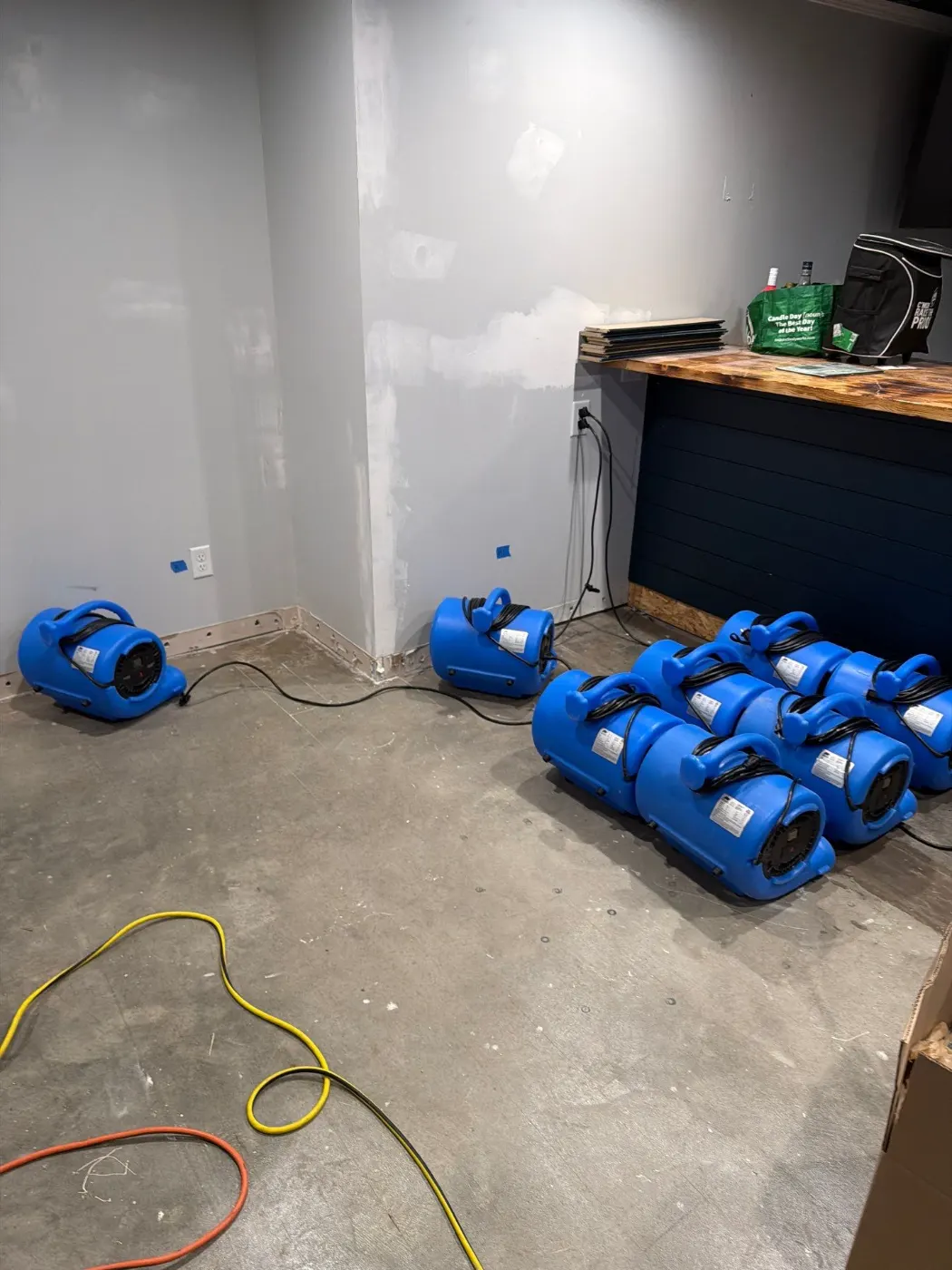
Commercial Water Restoration in Fairland
Photographs from real commercial water restoration jobs completed by our crew in Fairland and surrounding areas.
Commercial Water Restoration FAQ
Questions Fairland property managers ask us about commercial water restoration.
Guidance and Standards for Commercial Water Restoration
- The ANSI/IICRC S500 is the published standard for professional water damage restoration. The current edition is the Fifth Edition, 2021. IICRC S500 Standard
- EPA advises drying water damaged areas and items within 24 to 48 hours to prevent mold growth. EPA: A Brief Guide to Mold, Moisture and Your Home
Fairland Neighborhoods We Serve
We take commercial water restoration calls in every part of Fairland. Pick your neighborhood for local details.
Other Restoration Services in Fairland
Fairland Water Restoration handles the full scope of restoration work. Explore our other services below.
Water Damage Restoration in Fairland
24/7 emergency response. IICRC certified water restoration from extraction to full dry out.
Learn more →Basement Flooding in Fairland
Basement water emergencies handled fast. Extraction, drying, mold prevention.
Learn more →Sewage Cleanup in Fairland
Category 3 biohazard cleanup. Full containment, decontamination, structural restoration.
Learn more →Request Commercial Water Restoration
Reach Us Directly
Our team is available 24/7 for emergencies and ready to schedule inspections during business hours.
Need Immediate Help?
For active water or mold emergencies, call us directly. We are available 24/7.